What the gruesome killing of environmental activist Nathalia Jiménez and her husband Rodrigo Monsalve, along with that of Maritza Quiroz in January tell us about the horrible reality which reigns in the magic setting of Colombia´s Caribbean coast

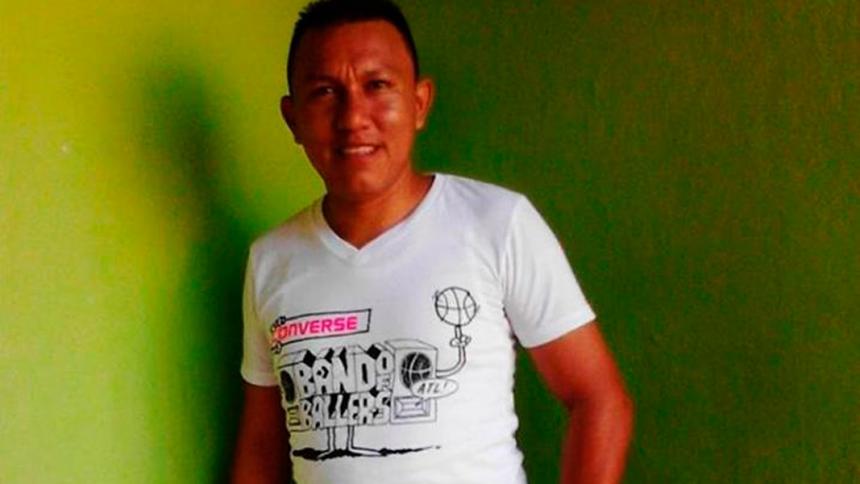
Nathalia Jiménez and Rodrigo Monsalve

Unfortunately it seems that a holiday season cannot pass in Colombia without fresh outrage and the loss to society of valuable, knowledgeable and necessary leadership. A year that began ominously with the murder of victim´s representative and land claimant Maritza Quiroz in the foothills of the Sierra Nevada is ending bleakly with the killing of biologist and environmental activist Nathalia Jiménez and her husband Rodrigo Monsalve by the beaches below. It is almost as if those responsible for such despicable crimes chose their moments carefully. Perhaps the holiday plans and mindset of the population at large restricts the outrage and focus somewhat. What is evident is that this particular sector of the Colombian Caribbean region, like so many more throughout the country, is neo-paramilitary territory and worse still, warring neo-paramilitary territory; something which places social leaders such as Maritza and activists such as Nathalia in a precarious position. This aim of this article is to examine why that is and provide some contextual information to understand the dynamics in this part of Colombia.

Nathalie Jiménez was 35 years old, and had lived in Santa Marta for several years. She had studied ecology at Javeriana University in Bogotá, and simultaneously completed an undergraduate degree in anthropology at the National University. Nathalie had studied Caribbean eco-systems and completed a Masters in Rural Development and Cooperation at the University of Lleida in Spain. She had been working for the Natura Foundation as environmental manager on a project related to the Magdalena and Cauca rivers. Her husband Rodrigo Monsalve, whom she had only married a week previously, had studied anthropology and worked as a DJ in Santa Marta. On Friday December 20th, they were driving to celebrate their honeymoon in the popular beach haunt of Palomino when the outrage occurred. The couple had passed the toll booth at Neguanje and Nathalia was on the phone to her father at approximately 5.30pm when suddenly the call was cut short after armed men had entered their car. Nathalia´s father reported that the final thing he heard was a plea from his daughter: “Please don’t hurt us”. The worst fears of a society accustomed to such scandal were confirmed when their dead bodies were discovered near beaches around  the village of Perico Aguao. A member of a local indigenous community was walking nearby and was alerted by a large presence of vultures circling in the skies above. Upon arriving at the spot below, the man saw two bodies tied at the hands and feet to a palm tree, the heads cloaked in cloth. They had both been shot in the head. Some reports have indicated that there were signs of torture but the full details are yet to emerge. Nathalia´s mother was quoted by Caracol radio as saying that her daughter had been killed because of her work with rural communities in the area. Curiously, the village of Perico Aguao was also scene of the attack and murder of park ranger Wilson Orrego by armed men on January 14th of this year. It is however the killing of Maritza Quiroz, just over a week before Wilson was slain, which seems particularly evocative given what has just happened, if only for the fact that more details are known about the work Maritza had been involved in.

Maritza Quiroz had survived some turbulent events. Her husband had been killed by armed groups (reportedly related to the guerrilla) near their home in Palmor towards the end of the 1990s. Following the killing, Maritza fled her home with her five children and little more than the clothes they were wearing. Like countless others displaced by the violence raging in rural areas of departments such as Magdalena, Maritza headed towards Santa Marta where she gradually built links with the handful of NGOs working with displaced people and through this became aware of what she was entitled to as a victim of the conflict. Not content to only look after her own interests (all five children gained access to education and are working professionally), Maritza spent the best part of the next two decades working with the most marginalised communities in Santa Marta; victims of the conflict and forced displacement. An avid learner who made the most of any opportunity to attend workshops and learn new skills, Maritza dedicated her life to helping others. She was described as a respected and serene figure who inspired tranquility; a leader whose words carried weight. Maritza had been involved in the regional victim´s board and was also hugely passionate about empowering rural communities and victims groups through rural development schemes. The quietly spoken but hugely determined leader even addressed, albeit reluctantly, the Colombian Senate in 2017. Maritza, alongside 8 other female victims of the conflict, had been awarded a plot of land in the foothills of the Sierra Nevada by the Institute of Rural Development in 2011, but reportedly she had been the only one to look to cultivate the land given the presence of armed groups in the area. It appears that this great survivor, and her message of solidarity, justice and reconciliation was a threat to the powers that be in the region as it was on that plot of land on January 5th of this year that Maritza Quiroz was shot dead by armed men.

Perhaps at first glance, the only common denominator between Nathalia and Maritza is the area where their deaths occurred, and the armed groups who exercise control there. Nathalia was almost 30 years the junior of Maritza, hailed from the interior of the country and had access to the highest levels of formal education. Maritza was from a rural background, and likely had had little in the way of formal education before her contact with relevant NGOs in Santa Marta. Yet both women were clearly avid learners who seized any opportunities which were available to them. Maritza had been married and reared five children, mainly on her own. Nathalia had only been married a week and any dreams she may have had of becoming a mother would be brutally extinguished. Both women exuded and inspired emotions of love. Those who worked with Maritza spoke of her inherent kindness and her ability to bring people together; a woman scarred by the conflict but utterly devoted to peace. Nathalia, from the little information to have emerged thus far, was a passionate advocate for the importance of eco-systems, and how communities can best exist and prosper alongside them. She was an animal lover who had adopted 9 stray dogs. Maritza´s passion was agriculture. Perhaps crucially, both women worked directly with marginalised rural communities and in particular women in these communities. Sharing their experience. Sharing their knowledge. Building a better country. And ultimately one may come to the conclusion that it was this work to build stronger and sustainable communities by empowering long marginalised sectors of society that led to these shining examples of what the country could achieve being identified as threats which must be removed. The Ombudsman’s office has constantly warned of the threats posed to activists, social leaders and human rights defenders in the region of Santa Marta and the Sierra Nevada. The region has as of late been terrorised by the Pachencas organisation, now commonly referred to by the more grand title of the Conquistador Self-Defense Forces of the Sierra (ACS), inheritors of the Bloque Tayrona of the AUC paramilitaries. It has also been reported that the Golf Clan, also known as the Gaitanist Self-Defense Forces (AGC), have been involved in clashes for territorial control with the previously mentioned ACS. An already tense situation has apparently been further aggravated by the presence of ELN guerrillas in nearby towns such as Minca. While these groups are primarily concerned by control of advantageous drug routes, local businesses (including the flourishing tourism on which the region depends) are obliged to pay protection rackets, while illegal groups also benefit from taxing any sales of land with the area. The region is also included in the regional development programs (PDET) which were created as a result of agricultural reform being a key tenet in the 2016 peace agreement between the national government and the now defunct FARC guerrilla organisation. Violence towards social leaders is disproportionately affecting regions where the PDET is being implemented. It is still early in terms of identifying a motive for this most recent outrage, but the apparent dedication of Nathalia to rural development, and indeed Maritza´s before her, would suggest that both killings could be seen as forming part of a larger pattern. 

And so, the festive spirit in Colombia is yet again sullied by the spilling of blood. It perhaps seems more chilling in this instance occurring as it does in one of the most important regions for tourism in the country. Thousands of tourists will be heading off on the same path as Nathalia and Rodrigo, seeking the lush vegetation and picturesque beaches which characterise the coastal stretch between Santa Marta and Riohacha. Hundreds more will be seeking the quiet calm of the Sierra Nevada which Maritza so enjoyed. Throughout the recent anti-government protests in the country, some commentators continued to ask for an explanation for the unrest. One of the many justifications provided is the lack of genuine action to stop the rising tide of violence which is enveloping anyone who dares challenge the hegemony of powerful interests throughout the country. Maritza and Nathalia, despite differences in age and background, dared to challenge that hegemony in search of progress for society. Their deaths, which bookend a 2019 full of such violent acts, lay bare the challenges facing Colombia more broadly, and this region in particular, as the country heads into a new decade.

*Information for this article was retrieved from the following sources:

https://www.elespectador.com/noticias/judicial/la-lucha-paramilitar-que-se-vive-en-zona-en-la-que-asesinaron-pareja-de-ambientalistas-articulo-897217

https://www.semana.com/nacion/articulo/a-mi-hija-la-mataron-por-ser-lider-social-madre-de-la-antropologa-asesinada-en-palomino/646335

https://lalibertadsublime.home.blog/2019/03/08/maritza-quiroz-the-tireless-champion-of-victims-rights-in-the-sierra-nevada/

https://www.semana.com/nacion/articulo/la-nueva-guerra-por-el-control-de-la-sierra-nevada-de-santa-marta/645228?fbclid=iwar0nqyu1uh7q-ctwqkswsrf7eeodux3ncasxjioacstlb5hy4ldmuypbvow

Guillermo Torres: The folk singer and former FARC member who sang his way into office

Guillermo Torres

Guillermo Torres bounded inside, leaving his two bodyguards (assigned by the UNP; National Protection Unit) to sip orange juice in the early morning sun outside. Dressed casually in a pair of loose fitting trousers, lime green shirt and sandals, with two mochilas (traditional handwoven indigenous bags) hanging from his neck, the next mayor of Turbaco seems to signify both a sartorial and symbolic shift in Colombia´s political scene. If the current nationwide strikes which have brought multitudes from various distinctive sectors onto the streets throughout the country provide a clear manifestation of the discontent towards the current government of President Ivan Duque and its policies, October´s local elections (where towns, cities and departments elected their mayors and councils) offered a hint at a population ready for change. Bogotá elected its first female governor, and an openly gay one at that, in the shape of Claudia Lopez. The nation´s second city Medellín opted for youthful independent candidate Daniel Quintero Calle, while Cartagena saw William Dau, once exiled due to threats against his life for highlighting cases of corruption, overcome traditional political structures to be elected mayor. However, perhaps the most notable result was that of the municipal town of Turbaco, just a short drive from Cartagena, where Guillermo Torres out-manoeuvred the traditional political machinations to become the first former FARC guerrilla member to be elected to office since the signing of the peace agreement with the government of Juan Manuel Santos in 2016. Torres, under the nom de guerre Julian Conrado, was known as El cantante de las FARC (The FARC´s singer) for his folk songs which were used for both propaganda purposes and to boost morale among fighters via radio transmissions. He first came to national prominence during the failed peace summit of President Andres Pastrana where he entertained the FARC representatives during breaks in negotiation. At one stage thought dead following the controversial bombardment of a FARC camp in Ecuador in which prominent guerrilla leader Raul Reyes was killed, Torres was arrested in Venezuelan territory in 2011. The Venezuelan government declined his extradition and in early 2013, he was allowed travel to Cuba to sit in on the peace negotiations between the Colombian government representatives and their FARC counterparts in Havana. Fast forward six years, and the 65 year old soon to be mayor sat down with La Libertad Sublime to talk about topics ranging from his formative years in Turbaco, the power of music, political violence, the current state of the peace agreement and why a drop of love is what is needed to transform the country.

His election as mayor caps a triumphant return to a hometown which Torres admits to only visiting intermittently and clandestinely during his years in the guerrilla ranks. What is clear from spending time in his company is that his formative years growing up in the town had a profound impact on him and his worldview.  Decades before assuming political power in Turbaco, Torres was championing causes as a folk singer: “I´ve been side by side with the people through my songs since I was old enough to understand things”. Torres tells the story of his first song in the town. It was called La Volqueta (The Dumptruck) and denounced a case of corruption over a promised resource which never materialised. The reaction of the authorities to the song taught the young folk singer a lesson he had struggled to comprehend in the classroom: “(in class) I´d understood the branches of power; executive, legislative and judicial, but the concept of the state in general wasn´t clear to me, until I made that song and the police arrived, gave me a beating, took me to the station and when the people made a fuss about it, an officer shouted We are the law, we are order, we are the state! So, what is the state? A kick from a police officer!” Torres says in those days he was involved with various leftist organisations or whichever organisations were working to defend the rights of the people, work that invited stigmatization both then and now, “…because here, there is always the belief that those who protest, even to the most basic extent, do it because they are influenced by foreign ideas…now they say Castro-Chavismo, but in those days they called you pro-soviet”, an observation reinforced somewhat by last week´s comments from current vice-president Marta Lucia Ramirez stranegly placing responsibility for recent anti-government protests on Moscow. Torres attributes this stigmatization to the Cold War logic of the National Security Doctrine, which highlighted the threat of internal enemies, and suggested that such a train of thought is what allows the recent wave of violence towards social leaders and activists in the country to continue unabashed. The folk singer claims it was this stigmatization that pushed him in the radical direction of armed insurrection. He cites the story of a friend of his, a fellow singer and medical student. This friend was carrying out his rural medical internship (mandatory for all medicine graduates in Colombia) in the town of San Carlos, Antioquia. Torres claims his friend was murdered after gaining a reputation for being a subversive having attended ,without charge, patients who could not afford to pay. Torres, who had already been targeted for his own political activism, explained his feelings at the time: “If they killed Julian, who wasn´t part of any leftist organisation, who is the most passive guy I´ve known in all my life, someone so noble and with such a love for humanity. If they´ve killed him, how are they not going to kill all of us…I said to myself, I either let them kill me here, or else I head for the jungle”.

The folk singer and activist says he joined the FARC guerrilla without “a minimal military vocation” and that in fact such a life was contrary to his worldview. He admits to finding the transition difficult but maintains he was never a guerrilla soldier in the true sense of the word: “In the jungle, with the guerrilla, I was a guerrilla singer, always doing my cultural work with the guerrilla soldiers. I sang to them (the fighters) but I also went out into the countryside to sing in the villages, to sing to the campesinos, to the workers and to the indigenous people. Whatever track we followed, through the mountains, I was always singing to the people”. Many would rightly question such a romantic view of the FARC and their presence in various rural sectors of the country, and if the post-conflict and its search for truth and reconciliation are able to develop as outlined, the country and the world will hopefully have a much more accurate picture of a very troubled period in the nation’s history. If history had turned out differently, Guillermo Torres´ time in the jungle would have been dramatically shorter. He joined the FARC in 1983 and was based in the Sierra Nevada de Santa Marta, the highest coastal mountain range in the world boasting snow-capped mountains overlooking the Caribbean Sea. Yet within a year, he was down from the mountains as part of a ceasefire and partial agreement signed with the government of Belisario Betancur. These peace talks resulted in the formation of a new political party, Union Patriotica (UP), a left-leaning party whose members came from various sectors of society and included representatives of the FARC and other guerrilla groups such as the M-19. Torres says the idea from the FARC was to take tentative steps with the party to explore how the political path would unfold without abandoning the armed struggle. Again citing the National Security Doctrine and its stigmatization of alternative political movements, Torres recounted the frosty atmosphere in which those early political steps were taken: “(There was a sense of danger) from the beginning. I remember that my first official visit was to the Governor of Magdalena…When I was coming down from my conversation with the governor, on the same stairs I was coming down, some officials were going up, and the look from those officials said everything; hatred was seeping out of them…I perceived a very negative spiritual force, and well, later materialized what everyone knows of, the mass genocide of the UP”. The National Centre for Historical Memory states that up to 5,000 representatives of the nascent political movement (which had made impressive electoral during the late 80s) were killed or disappeared between 1984 and 2002 in a frenzy of violence perpetrated by right-wing paramilitaries, drug trafficking organisations and members of the state security forces. Many more were forced into exile due to the bloodshed, in a wave of constant violence which was declared by the Attorney General´s office as a crime against humanity in 2014. Among the victims were two presidential candidates (Jaime Pardo Leal and his replacement Bernardo Jaramillo Osso), 8 congress representatives, 13 deputies, 11 mayors and 70 council members, with the motive not lost on Torres: “They said that the people didn´t accept us, they did accept us, because we had so many councillors, so many mayors…and they killed most of us. We moved democratically and they took our seats with bullets…Well once more we went back to the jungle”.

The massacre of the UP was followed by two decades of spiralling violence in which paramilitary and guerrilla groups fought for territory, people were routinely kidnapped or disappeared, state security forces were implicated in collusion and cases of mass homicide where young men were lured to their death and later presented as guerrilla fighters killed in combat. In the midst of this slaughter, Guillermo Torres once more found himself involved in peace talks, this time the failed talks between the FARC and the government of Andres Pastrana between 1998 and 2002. While it has long been accepted that the FARC took advantage of these talks and the large demilitarised zone surrounding the town of Caguan (where the talks took place) to strengthen their strategic presence, Torres claims the government was concerned by what they perceived as apparent support for the guerrilla from certain sectors of society: “The other public audiences (at the talks) had around 400 people, then a thousand, two thousand and three thousand, when they noticed how the people embraced us, how they sang with us, how they danced with the insurgents, it made them uncomfortable and when they decided to break the talks, Colombia saw the biggest war it has seen”. The failure of the talks led to the election of hard-line candidate Alvaro Uribe, who became president on the back of a pledge to take the fight to the guerrilla forces, backed with vast resources from the U.S. through the Plan Colombia agreement. This period was among the most bloody in the history of the country with clashes between the military and the FARC, increased aerial bombardments and a large number of massacres carried out by the guerrillas, and disproportionately, by right wing paramilitary groups before their eventual and controversial demobilisation in 2006. The level of collusion between politics and paramilitarism has long been known and investigated through the parapolítico scandal and Torres touched on some of the more cynical motives behind such alliances: “They have a concept, and it´s in the documents Santa Fe 1 and Santa Fe 2…the guerrilla move among the population like a fish in water. If we can´t take the fish from the water, then we´ll take the water from the fish, and that´s when there was this amount of massacres in Colombia…But these massacres didn´t only happen because there were sectors who supported the guerrilla. Here, there´s regions where the guerrilla never went, and they massacred people with the argument that they supported the guerrilla. But if there were no guerrilla there? No, it´s because they´d thought of doing a macro-project there, or they were going to put in a mining company…You know that here they´ve taken millions of hectares of land from the people”. This oppressive violence has tended to disproportionately affect minority groups such as campesinos, indigenous communities, and Afro-Colombians, resulting in Colombia having the second highest rate of internally displaced people in the world, an issue Torres will have to face as incoming mayor: “Here in Turbaco, three days ago, I went to meet a displaced community from Córdoba, the Zenu (indigenous community). Here in Turbaco, there are Zenu. Why here if the river Zenu is in Córdoba? Because they displaced them”.

The very fact that Guillermo Torres will become mayor on January 1st 2020 would have seemed highly fanciful as the FARC´s singer sat in a Venezuelan jail cell nine years previously. It is of course a fact only made possible by the peace agreement signed with the Santos government in 2016. Torres was present for the talks in Havana but was not part of the negotiation team. If he was sore at not being more central to the talks, the incoming mayor of Turbaco seems more concerned by the outcome: “They managed something which left the government in disbelief. Many people thought that it would not happen, that the FARC insurgents would lay down their arms and pass towards reincorporation in civil society”. Having experienced first-hand what happened to the UP in the 1980s and seeing the Caguan peace talks lead to perhaps the most violent period in the history of the Colombian conflict, one would suspect that the guerrilla rank and file were apprehensive at the thought of laying down their arms. Torres elaborated on the mood within the FARC reincorporation camps: “There were nerves, there was distrust but there was hope. I suppose you could say that hope outweighed the distrust…so even with all the distrust, we gave up our arms because it´s not as if we are not aware of what has happened historically with the guerrilla movements who have handed over their arms (in Colombia)”. Torres went on to highlight examples from Colombia´s 20th century to demonstrate that insurgent groups have not fared favourably following the laying down of weapons before stating that nearly all of the country´s political parties could be traced to some form of armed group. Despite this tragic history of bloodshed, and the fact that more than 130 demobilized FARC fighters have been killed since the signing of the agreement, and indeed the apparent ambivalence of the current Colombian government towards the agreement, not to mention that some high profile FARC commanders have joined the dissident ranks, Torres remains convinced that the peace deal will prevail: “I continue with the same hope…I know that there are comrades that have returned to the jungle. I cannot give an explanation for why they have done that. I can only explain why I stay on the path of peace”. With question marks over the future of the peace agreement, and the history of violence associated with moves towards peace in the country, the election of Torres places a huge spotlight on his tenure, what it represents for the post-conflict, and it perhaps also places him in the crosshairs of those who wish to see the process fail. Interestingly, Torres did not stand as a candidate for the FARC political party, which has performed poorly in the voting process thus far, but as a candidate representing Colombia Humana (a broad progressive movement under the general leadership of Gustavo Petro, who lost in the presidential run-off last year) and the aforementioned UP. When quizzed on how he managed to score such an impressive victory in the town he responded that “With love. I sang during the campaign a song called Una Gota de Amor, a drop of love, and with that song and others, we went from house to house talking to the people…I´d say more than the people voting for a mayor, they voted for the peace process, that Turbaco has given an example to Colombia and to the world that peace is possible. Now we have to see how the other side responds”. When quizzed on feeling the pressure ahead of his inauguration as mayor, and whether he feared for how others may react, Torres sounded a defiant tone: “I am not going to fail the aspirations of the Colombian public. I know that there are intentions that have been expressed publically (from figures within the party of President Ivan Duque): We are going to tear up the peace agreement. I say it the other way round; I´m fighting to tear up the agreement of war. It´s the public who need to identify who says one thing, and who says the opposite”.

Guillermo Torres will assume office at the beginning of January as an unlikely flagbearer for the future success of the Colombian peace process. The folk singer turned insurgent propagandist turned mayor of Turbaco. Critics of the peace agreement will seize on any perceived failure to highlight why the FARC should not belong in politics. But if he manages to leave the town and its people better off than how he receives it, then a narrative of hope and reconciliation can gather important momentum. In his favour, he seems to have a clear and sincere perception of what his role should be: “What is the greatest responsibility of a municipal administration? Resolving problems in public services; health, education. But here something happens, politics stopped being politics and turned into a business. That stops with me”. He cites the poor state of public healthcare in the town and a general lack of opportunities for young people once they finish their schooling, and how this feeds into issues of insecurity in the town: “Who is responsible for the delinquency? The kids, the youths or the state which denies them the opportunity of work or study?”.  He stresses the need for more investment in the town, better protection of natural resources and the promotion of eco-tourism, and seems confident that the support of the town´s people will help him achieve these goals. Students of political science might argue that represents only half the battle but Torres certainly talks a good game, and he comes across as sincere and enthusiastic. Whether that will be enough to enact real change can only be decided in four years’ time. What shines through during the course of the interview is his belief in the peace agreement as a path forward for the country, so it seems appropriate to end with a plea from Torres for the Colombian public to come together in order to strengthen the peace process and reject a return to conflict which he sees now as an industry in its own right: “I am not going to participate any more in the business of death. My business now is not a business at all, it´s peace”. With that he was back out the door and away with his bodyguards.

María del Pilar Hurtado: an advocate who lived, and died, for people’s rights

María del Pilar Hurtado

According to Indepaz (Instituto de Estudios para el Desarrollo y la Paz), between the 1st of January 2016 and the 20th of May 2019, 837 social leaders were murdered in Colombia, with a particular spike coming since the signing of the peace agreement in 2016 between the FARC (Fuerzas Armadas Revolucionarias de Colombia) and the government of former president Santos. One of the most controversial cases in this wave of violence is that of María del Pilar Hurtado. She was a social leader, who lived in Tierralta, Córdoba, and her case became notorious as somebody recorded and posted a video of her young son mourning while the body of his mother lay on the floor. This death moved thousands of people around the  country and even provoked reactions from international organisations due to the powerful images shown in the video.

As a social leader, María del Pilar Hurtado had worked for her community. She started her social work when she was living in Puerto Tejada (Cauca) denouncing kidnappings and murders in the Casas de Pique (homes in certain areas with a gruesome reputation for interrogation, torture and killings by illegal groups). Due to this work, Maria del Pilar Hurtado was forced to uproot her family on account of threats against her life. After that, she moved to Tierra Alta where she continued her work as a social leader. She met on several occasions with the mayor of Tierra Alta due to the lack of houses in the region and worked with the victim´s foundation Forward with Strength (Funviavor, in Spanish). It was reported that in particular, Maria was representing members of her local community who were living in an invasión (informal housing built on land belonging to large landowners) on land owned by the father of the mayor. Her death, on June 21st, 2019, represents not just a mother who was killed in front of her son, but also represents the extinguishing of a voice of hope for the future of the country. A voice which was brutally silenced. Because of the impact that this case, and in particular the video of the killing´s aftermath, generated in the country and around the  world; people called for justice. The international media spread the case and made visible many other similar cases as well as highlighting the actual situation in the country. Nevertheless, the government has chosen to ignore this and many other cases using different strategies to gloss over these brutal acts instead of acting and cleaning its image. 

As days go by, the country and Maria del Pilar Hurtado´s family are in need of answers to this case. This case needs, at least, a judicial decision regarding the people who are involved in it. Although this case has had more representation in the international sphere, it has gradually, and with the complicity of the national government, ceased to be a principal topic. And unfortunately being forgotten, as in many other cases in the Colombian system, is a likely outcome. The south of Córdoba, where Tierralta lies, is a precarious territory due to the presence of several illegal armed groups. The territory had historically had the presence of FARC guerrillas and the peace agreement in 2016, and the demobilisation which followed, created a power vacuum in the region. The Autodefensas Gaitanistas de Colombia (AGC and also known as the Clan de Golfo) have looked to extend its influence in the region and have been involved in the conflict with the Caparrapos organisation, a splinter group from the AGC with links to Mexican drug cartels. Clashes between these neo paramilitary groups have displaced thousands from rural communities in a region with high levels of poverty. Cases of displacement have occurred as a direct consequence of fighting between rival groups, but also as a result of threats against anyone unfortunate enough to be identified as an obstacle by the illegal powers. 

Unfortunately, Hurtado’s family is not the only one that has gone through a pain like this. For example, a year before, Temístocles Machado was murdered. He was a social leader, who defended the land rights in his community in Buenaventura. He fought for the conservation of the lands located on the internal alternating route. Like María del Pilar Hurtado, he was an advocate for the rights of marginalized communities, like so many other people (such as social leaders and indigenous leaders) who have been assassinated since the signing of the peace agreement. The United Nations and the Colombian state declare that almost 340 people have been murdered since 2016, but as mentioned previously, other organisations such as Indepaz maintain there have been almost 840 murders. The Colombian state, as subject of international law, has rights and duties. Its main duty is to maintain its sovereignty, but furthermore, the state has to fulfil its duties in terms of respecting and protecting human rights. Colombia has been unable to satisfy those obligations, especially those regarding social leaders such as the mother of four María del Pilar Hurtado.

In conclusion, the Colombian government, as well as Colombian society, must play a proactive part in order to defend each of our social leaders and not let ourselves be blinded, so in that way, we can know and understand what is happening in our country. The government should look for strategies with assistance from the international sphere, where they work by means of cooperation and can find a solution and not leave these cases in the past. As has been seen in recent years, the rights of everyone as well as social leaders, need to be respected and defended. The peace process needs to be supported much more by the national institutions to ensure its success, and ultimately provide a safer environment for leaders such as María del Pilar Hurtado.

*Article written by Valeria Altafulla, Rafael Daza, Andrea Giron & Gilma Gomez

José Victor Ceballos Espinayu: The indigenous teacher and activist slain for defending the rights of his community

Jose Victor Ceballos Epinayu was one of the many social leaders who was killed in Colombia this year. He was teacher and activist from La Guajira, as well as being a very active member of the NGO “Nacion Wayuu”, a non-profit indigenous organization with the mission of defending Human Rights. Unfortunately, this work has led to their members facing numerous threats from illegal groups in the region. Jose Victor´s is a significant case because it highlights the atmosphere of disinformation surrounding the killing of social leaders in Colombia with some sources appearing to cover up the motives for his murder by giving the impression his killing was simply another case of insecurity in Colombia. To understand the context surrounding his murder, it is important to analyse the situation in  La Guajira and ask ourselves the following questions. What is happening to its inhabitants? What issues is “Nacion Wayuu” bringing to the forefront? Is the government doing something to protect the lives of these leaders? These are the matters that are addressed in this article in order to place a spotlight on the murky depths of the issue. 

José Victor was a teacher at the “Centro Etnoeducativo No. 12 – Murray”, a school with an emphasis on the local indigenous customs. He was called “el mono” by people who were close to him. His Uncle, Edwin Ceballos Sijona, is a  traditional authority of the aljote community and an active member of the aforementioned movement Nación Wayuu, one of  the NGOs that have sued the government and urged the international community to act effectively in response to the killings and aggressions that have been committed against social leaders and the peasant community, as well as other marginalized sectors such as Indigenous groups and Afro-Colombian communities. As a result of their involvement with Nación Wayuu and the work carried out with that NGO, both José Victor and Edwin had appeared in threatening pamphlets in 2018, which meant Edwin had received protective measures from the “Unidad Nacional de Protección” (National Protection Unit). However, José Victor did not want to receive protection because his core social function focused on teaching, and he felt this would be complicated by having armed protection. His decision would have fatal consequences. José Victor was killed on February 19th 2019 in Riohacha, La Guajira (Colombia) when he left home on his way to work. He was attacked with a firearm by a man riding on a motorcycle, and shot to death despite the best efforts of a group of neighbours who tried to help save him by taking him to the hospital. According to initial reports, the motive for the attack on José Victor was because he had a “top of the range” telephone. However, given the threats against him due to his involvement in activism as we mentioned previously, this seems like a convenient “smokescreen” used to distract attention from the crude reality facing social leaders in the country. To understand this skepticism, it is helpful to understand the dynamics in José Victor´s home region.

La Guajira is a desert peninsula located on the shores of the Caribbean Sea in the north-east of Colombia. It is a region rich in resources such as, gas, coal and salt; these resources are both a blessing and a curse because they are also the reason why multinationals and the Colombian government itself are exploiting these commodities to gain economic profits. The exploitation of these mineral resources has led to the displacement of several indigenous communities, forcing them to leave their ancestral territories. Furthermore, the mining activities have also diverted their sources of freshwater, an issue which contributes directly to the issue of malnutrition facing the Wayuu indigenous community and their children; greatly impacting on the rights, lives and dignity of the indigenous community. Nación Wayu has certain objectives as they seek to defend the human and collective rights of ethnic minorities or to fight against the violation of the universal rights of children, especially Wayuu indigenous children. This work places the activists involved in a precarious situation, given the wave of violence against social leaders and human rights defenders in Colombia.

Although the website of the presidency of the republic states that during the current government (headed by president Ivan Duque) the deaths of social leaders have been reduced, every day the country awakes with news reports on the deaths of social leaders, and increasingly indigenous leaders. Diana Sanchez, director of the rights organization “Minga”, expressed that within the movement “Defend the Peace”, there are three key demands on the State. One: That the peace agreements be fully complied with. Two: to solve the problem of the substitution of illicit crops, which generates favorable contexts for social leaders to be assaulted or murdered. Three: the definitive closure of the conflict by political means as the best way to clean up the territory. Unfortunately, what the government has really been doing is almost nothing to stop this systematic murder of social leaders. The lack of action of the justice system to sanction these cases and of state agencies to effectively address the early warnings issued by the Ombudsman’s Office speaks volumes for how committed the government is to stopping these systematic killings. There is also the elephant in the room of how the interests of illegal armed groups holding a monopoly of violence in marginalized regions of the country (such as La Guajira) frequently overlap with the interests of multinational mining companies to carry out extraction practices without the interference of local activists who are resistant to such activities in their territories.

Finally, it is necessary to point out that , although the specific case of José Victor Ceballos did not receive enough media attention and that there may even have been an attempt to muddy the water over the real  reason of his death, it is necessary for everyone to know what is going on in the country, and especially (in this case) the issues being faced by communities in La Guajira, where there is such a serious absence of state presence. Being better informed will help us to understand the reason why social leaders are fighting and why they are being assassinated. It is in this way, by reading articles such as this and by using social media to spread their message that we can help to support leaders like José Victor in their struggle. 

*Article written by Valentina Nieto, Aura Ripoll, Suzan Villanueva and Dayana Viloria

Manuel Osuna: The campesino whose gruesome murder highlights the impunity which reigns in the forgotten corners of Colombia

Manuel Osuna, the rural leader who was brutally murdered by neo-paramilitary structures for his commitment to crop substitution programs

The systematic killing of social leaders in Colombia has become an important issue to discuss in multiple scenarios such as social media, political discourse, or even on a daily basis among civil society. According to the Consultancy for Human Rights and Displacement (Codhes), 86% of the cases are unpunished. Unfortunately, there have been more than 300 social leaders (going by the lowest estimates) killed all over the country since the signing of the peace agreement between the government and the FARC guerrilla group in 2016. In this article we want to focus on the case of Manuel Osuna and the objectives of neo-paramilitary groups who are frequently involved in these acts of violence. Manuel Osuna was a farmer who was murdered and decapitated by armed men, who, after carrying out this heinous act, proceeded to burn down his house. The community where he lived indicated that those responsible were from paramilitary structures that dispute territorial control. 

On a Saturday morning, July 6th of 2019, peasant and social leader Manuel Osuna was beheaded and his farm burned down, supposedly by members of the armed group “Los Caparrapos”. The commander of the Córdoba police, said that the murder was reported by a resident of the area, who went to the town of San José de Uré to alert the authorities of the situation. Manuel Osuna worked with the Association of Peasants of the South of Córdoba (Ascsucor) on crop substitution issues and was also a land defender. One of the main problems that social leaders are facing is related to their cultural identity because, according to them, when they are displaced from their lands they lose their autonomy. For this reason, the defense of their territory via opposition to the development of illegal mining with mooring machines, has put them at greater risk and has undermined the traditions of these communities. Manuel Osuna’s case took place in the village of “El Cerro” in the South of Córdoba, where basic needs are unsatisfied by the government and there’s also a power vacuum left by the retirement of the ex FARC-EP guerrilla. Such a scenario highlights the centralized nature of the government and how some regions or areas around the country are forgotten by the state, a fact which is evidenced by the power vacuum in the absence of the guerrilla organisation. However, such a situation cannot be allowed to normalize. 

San José de Uré, where Manuel Osuna was killed, is a municipality located at the south of the department of Cordoba. This place represents a political border between the Andean region and the Caribbean region of Colombia. However, the main characteristics of this territory can be summarized by a lack of state presence, marginalisation of its inhabitants, and the continuous illegal exploitation of minerals, cultivation of drug crops and trafficking of arms.These activities are carried out by illegal armed groups that try to maintain dominance in the zone. Because all of this, the public policy and institution that began with the Peace Agreement between now disbanded FARC guerrilla and the Colombian Government, called “National Program for the Replacement of Illicit Crops”, asserts that San José de Uré is a priority for the implementation of its policies. Besides, the government also catalogues the territory as a primary objective of the “Development Program with Territorial Focus”, another key tenet of the peace process. There are also some documents from civil society that explain the current situation of rural areas and the violence in Colombia. One of those is the “Report of Patterns of Violence in Colombia”, where it is possible to find correlations between the systematic assassinations of social leaders and some structural problems related to the lack of institutional order in the country, like illegal economies, mining and energy exploitation, the presence of paramilitary groups in some rural areas, and the forced displacement of rural communities. According to “Defendamos la Paz”, the leader murdered was part of the Association of Peasants of South Córdoba, Ascsucor, of which eight members have been murdered since the signing of the Peace Agreement with FARC-EP guerrilla organisation. Furthermore, because of being a land defender, there is a common aspect between the labours of this social leader, Manuel Osuna, and the social leader María del Pilar Hurtado, who was killed in front of her son, and who represented the land interests of the people located in the nearby town of Tierra Alta. Both cases highlight the precarious position in which local leaders find themselves in the south of Córdoba.

One reason for a lack of optimism over seeing a decrease in these killings is the apparent indifference of the national government, one contributing factor to President Duque’s unpopularity. This is understandable, not because people believe that the president has direct responsibility, but because the lack of specific actions on the part of the national government to protect these human rights defenders, political activists, environmental defenders, and social leaders in general, attests to a huge lack of political will on the part of the government. In the context of the Colombian post-conflict, it is clear that the government is not doing enough to protect social leaders and the communities they represent. Last year, for example, Luis Barrios Machado, who had asked for protection from the government, was killed in the department of Atlantico while watching a football match. As long as there is no real commitment, manifested in clear policies and specific actions on the part of those who hold positions of power, gestures of solidarity (such as the ill-fated appearance of President Duque a march in support of social leaders) appear completely shallow. As long as the government does not take the protection of social leaders in the national territory as a real priority, Colombians will continue to accuse it of being complicit in these killings. Refusing to address the urgent need for protection of our social leaders not only shows a lack of political will on the part of the government, but also goes beyond a lack of empathy; ignoring social leaders is equivalent to letting them die, often in brutal circumstances such as what happened to Manuel Osuna. 

To summarize, it seems obvious to state that Colombia is witnessing a clear and notorious path of impunity, injustice and human rights infringements. The lack of attention that this issue receives as well as the indifference of not only government officials but also society in general, threatens to intensify and even normalize such cruel acts of violence. Our marginalized communities, especially, are living in fear and under the threat of dangerous criminal networks that seek selfish interests and spread terror among those who raise their voices for fundamental causes. Manuel Osuna’s case is just one among the wave of killings that are happening all around our country. The fact that social leaders are being silenced for defending such important and necessary ideals should be a matter of primary interest in terms of policy production, effective punishment and incarceration processes. It is imperative that we make a desperate call to the authorities so that our social leaders can develop their activities in complete safety; we demand for the sake of democracy and the protection of rights in Colombia that the killings stop, and that aggressors are heavily punished. As a society, we must raise our voice and spread the word; denounce the killings, and take action!

*Article written by Daniela Riaño, Daniela Rodriguez, Sebastián Lujan & Valentina Velasquez.

Manuel Gregorio: A brief history of a tragedy in the south of Córdoba

Manuel Gregorio

*Article by Andrés Salinas, Mauricio Sierra, Amy Torres & Juan David Vargas

Imagine yourself in a pretty beautiful landscape; with vegetation, hills, and fresh air, but without any source of income except for growing crops and selling the produce. However, there’s a problem: you grow illegal crops, like coca, or poppy. The thing is, you, as an individual, have to sell these types of crops, or else, you would struggle to make ends meet. Additionally, you have to sell them to illegal armed groups. You don’t have much of a hope, do you? Now, imagine after a long time, the state, which has always been absent in all but name, comes and tells you that you can change this situation, that the State would help you transition to legal crops, to help sustain your family through legality. Sounds great right? What could possibly go wrong? Well, those illegal armed groups are not happy with this, so you are threatened, bullied, and harassed, in order to maintain the status quo which favors those illegal interests. Your life’s on the line now. What would you do?

Well, in general terms, such a situation illustrates the reality which Manuel Gregorio Gonzáles Segura, a social leader from the south of Córdoba, had to endure for a long time. The region  where he lived, like many others throughout Colombia, has long been ignored by the state. More specifically, he lived in rural Montelíbano, in the village of Unidas. Manuel was an active member of several “campesino” associations which tried to claim rights for the people who have worked the land for many years in this region. He was part of the South Córdoba Campesino Association (ACSUCOR), which is part of the National Association of Campesino Reserve Zones (ANZORC). He was also a member of the National Coordinator of Coca, Poppy and Marijuana (COCCAM in Spanish), and was also a beneficiary from the government’s Integral National Plan of Substitution of Illegal Crops. So, as you can see, these roles in various organizations in the agrarian field of the region made Manuel an especially active member; a recognized individual fighting through legal means towards a better life for the “campesinos” in his local ambit. Also, he was coordinating the transition towards the usage of legal crops, within the context of the implementation of the peace agreement, which was signed by the government of Juan Manuel Santos and the FARC guerrilla organization in 2016. But to his dismay, the general zone where Manuel Gregorio carried out his social work has been historically affected by the presence of a number of paramilitary and illegal groups because of its geographically strategic position, and also because of the power vacuum left by the FARC after the peace process which caused the increased presence of these groups in the area to impose their power over the others. Consequently, the work made by Manuel Gregorio caused discomfort for illegal and paramilitary groups in the zone, groups who are reliant on drug trafficking, because it meant a risk towards their business. This would lead towards the tragedy that happened on June 26th of 2019.

The killing happened near the town of Montelíbano in the department of Córdoba

On the day of his death, June 26th 2019, Manuel Gregorio left his home in the village of Unidas, towards the town of Montelíbano to buy groceries for his family. Some hours later, a suspected paramilitary member arrived with the horse on which Manuel had been riding, with all of the food the social leader had bought in the town. This suggests that he was returning from his journey to Montelíbano when the tragedy happened. It is reported he was forcefully retained by suspected members of the Gaitan Self-Defenses of Colombia (Autodefensas Gaitanistas de Colombia, and also known as the Clan del Golfo), a well-known paramilitary and criminal group that has a presence in this areas of South Córdoba. Manuel was then tortured and finally, he was shot several times, killing him on the spot. His body was found the next day by the community. The day they killed Manuel Gregorio González, there was no immediate police presence. The search for the body was carried out by members of the Association of Farmers of the South of Córdoba (Ascsucor); the association to which the murdered leader belonged. The police arrived twelve hours later at the scene, but the population did not allow their entry. By this time, the lifeless body of Manuel Gregorio had already been prepared for burial by the same community, who, in the face of the outrage caused by the murder, decided to take the body to the house where Manuel had lived with his children. And so another family were left without a father, another community without a leader.

Manuel Gregorio, and how he was found by members of his community.

Manuel’s was another death foretold. The Ombudsman’s Office, in its early warning 083-18, denounced that there are areas in the south of Córdoba where there are imminent risks for peasants because of the growing conflicts between “paras” and FARC dissidents. The Ombudsman stated the following: “This context of growing hostility among illegal armed groups tends to aggravate the risks for social, ethnic, community leaders, of Community Action Boards and human rights defenders who try to administer justice, claim rights and contribute to the implementation of points 1 and 4 of the Peace Agreement ”. Unfortunately, for Manuel and many others throughout the region and the country, these warnings were not heeded by the authorities.

Precisely, this last topic has a vital importance in analyzing this terrible deed. Indeed, the big question still remains: how do acts like these affect the big picture regarding the implementation of the peace process? Of course the direct consequences of this heinous event is that it further strains the already tense situation between the ex coca farmers and the government due to the constant threats and assassinations carried out by the paramilitary groups in the area, groups who do not agree with the newly found program for substitution of illicit crops. The national government and the Commission of Peace of Congress claim they are ready to take serious action regarding this topic. For example, Paloma Valencia, a Senator of the ruling party Centro Democratico, has stated that the government needs to take swift action to stop these threats and killings from happening. There is a very tense ambiance in the area and the people of these marginalized regions such as the south of Córdoba are fed up and furious that the government is not giving enough protection to the farmers who are part of the Replacement Crops program and they are of course very worried that Gregorio´s case will repeat itself in the near future. However, for now we can only wait and see how the situation develops. This type of situation of course isn’t isolated. Several cases of various social leaders that have been killed previously have the same trends and patterns. First of all, their work is focused in a far away community, where the power of the State is absent. They are in many cases associated with community or people’s associations. Also, they try to empower the impoverished or disadvantaged communities to gain their legitimate rights. With these actions, they actively or passively challenge the people that have always had power and presence in the zone, legal ones such as traditional families with political power, or illegal ones such as paramilitary groups or guerrilla groups. Social leaders then begin to receive death threats which aim to maintain things as they were, to not change anything. Early alerts are sent to the government, but that makes almost no difference. In the end, they are frequently killed (anywhere between 285 and 765 since depending on the source of information and definition of social leader), because of the lack of action by the State, and the impunity of the posterior legal process, which seems to loom over the assassination of every social leader.

The peasants of the South of Córdoba are trapped now more than ever. On the one hand, there is the power vacuum that the Farc left that is being filled by bullets from other groups outside the law. On the other hand there is the impossibility of cultivating something other than coca which would offer a steady living. Finally, there is the lost hope of being able to be free from a conflict that they have lived for generations, one which had been promised to end, but which for leaders like Manuel, has worsened. Within the South Córdoba Campesino Association (Ascsucor in Spanish), Manuel carried the hope of bringing the dream of a better life  to his people. His contribution to peace, in addition to his life, was to believe that the voluntary substitution of illegal crops was the most beneficial tool to achieve a transition to a new life.

Among other things, the implementation of the peace agreement in the south of Córdoba is of relevant importance to the agreement itself, but also for the benefits that that process can give to those farmers. Between the peasant communities and the government of president Iván Duque, the tension grows over what these threatened rural communities see as a betrayal of what was promised by the substitution program. The protection of these social leaders is of vital importance to the agreement and indeed for the advancement of democracy in Colombia. One thing cannot be separated from the other; without protection for them, the voluntary eradication of crops contemplated by the program is almost impossible, because two or three farmers are dying for every eradicated hectare. In this case, if the situation continues like this, the farmers in these areas will be extinguished before the coca cultivations are. 

The presence of paramilitary groups in this area is a worrying sign for the government and for society. We have been told time and time again that the “paras” are extinct, but this, like other lies that are repeated to us daily, are mere stories that are told in the big cities. However, in the forgotten regions of Colombia, such as the south of Córdoba, the presence of neo-paramilitary structures is so real that Manuel Gregorio is just one of so many similar cases throughout the country.

“They continue killing us and nobody cares”: the message from three social leaders

*This blog post is a translation of an article published by El Espectador on June 28th, 2019. A link for the article can be found at the bottom of the post.

Erlendy Cuero, Francia Márquez and Audes Jiménez this week attended the General Assembly of the Organisation of American States (OAS) to raise the issue of the systematic killings of human rights defenders in Colombia and report the most recent case, that of María del Pilar Hurtado.

Audes Jiménez, Francia Marquez & Erlendy Cuero

“There is an extermination occurring”: Erlendy Cuero, vicepresident de AFRODES (National Association of Displaced AfroColombians)

I cannot find the words to express what I felt when I saw the images of Maria del Pilar Hurtado´s son crying by her body and when I heard that the government, quite deliberately, announce that she was not a social leader simply because she was not part of a well known organisation. Yet this was a woman who had been working for her community, a victim who was forced to leave Cauca simply to protect her life. And this is yet another murder which doesn’t seem to matter. 

If this had occurred in another country, there would be an outcry and a rejection of such acts of violence. What will be of this boy? Will he ever be capable of forgetting the sight of his mother in such a state? All we social leaders see today is indifference and a lack of solidarity from the Colombian people. 

For as long as the Colombian government does not recognize that there is an extermination occurring of a population which supports this country, it is very difficult to see a possibility of stopping these killings of social leaders. How is it possible that Colombia has more than 700 leaders killed, and yet the government behaves as if nothing is happening; it is more concerned with events in Venezuela than the internal crisis which we are living. 

I have protective measures granted by the International Court of Human Rights, having fought nine years for them to recognize that I was in a situation of extraordinary risk. A few days ago, they told me that they had an armoured car for me, but they did not provide gasoline because the National Protection Unit (UNP) has an economic deficit and this is impacting on security measures for social leaders. If there is not even money to fill the tank of a car, how are we to carry out our work?

The risk does not disappear. I have a security detail, but I live as if incarcerated 24 hours a day. I cannot go to the supermarket without two men accompanying me, I cannot go to buy underwear like any other women do. I rely on my security measures and I am thankful I have them, because I know that many leaders would still be alive if they had had similar protection. People often think that getting into an SUV is a luxury, but it (the situation) changes your life; you must sacrifice your intimacy.  

“We are angry”: Francia Márquez, winner of the Goldman Enviroment Prize 2018 

We are facing a criminal state, which by omission or intent, is permitting an ethnic, physical and cultural genocide of black, indigenous and rural communities in distinct social sectors, people who have believed in and put their weight behind the building of peace in this country. 

It is structural racism which today allows that we women continue to be assaulted, or to be murdered as in the case of our companion, Maria del Pilar Hurtado. We are angry and we are brave, because it is not possible that a country which talks of peace has at the same time, such a hollow discourse towards peace, one which fails to stir those people from the cities who never had to endure the armed conflict, who do not know what it is like to experience bombardments nor comprehend what it means to have your children recruited. This is what is happening in Tumaco, Chocó and Cauca. This is what pains us. And for this I cannot applaud. I cannot smile. 

We are the ones who said yes to peace and it is us who have provided the dead. Rivers run with blood, and end up being cemeteries as even our traditional ways of burying loved ones have been taken from us by the war. In spite of this pain, we are building peace, singing songs of life, and indeed defending our great home. We do not do this simply for the black population, but for humanity, and yet they continue to kill us. 

Smoke screens: Audes Jiménez, coordinator for the Andean region of the Network of Afrolatinamerican, Afrocaribbean and the Diaspora Women

I ask the OAS to intervene and tell the Colombian government to stop using smokescreens to obscure the situation which the country is currently experiencing, and to concentrate on the serious problems facing social leaders in Colombia, in particular the problems (threats and violence) facing Afro Colombian women’s leaders in various regions. 

We have a multitude of women being killed. The latest was Maria del Pilar Hurtado. We need that cases like these cease happening, that security measures are established and a true implementation of the peace agreements is made. No more. Enough is enough! We do not want to see the real reasons behind these killings continually subverted in an attempt to portray this violence as being unrelated to the issues of land restitution and rights. 

Mr President, Ivan Duque, stop labelling these killings under different titles and searching for different causes. Maria del Pilar Hurtado and many more of those killed were claiming rights which the Afro population are entitled to. The government is looking at various ways to tear apart the peace agreement, legislatively and executively. Please do what the people are calling for, to really utilize what you have to complete your mandate as president. Don’t allow that lives continue to be lost in the country. 

Many of the representatives assigned by the government to positions responsible for the guaranteeing of human rights do not fill us with confidence, above all the appointment (as Colombian representative to the OAS) of Alejandro Ordoñez, extremely conservative in his opposition to many of the gains made in terms of women’s rights and the rights of ethnic populations. His presence in the OAS is not marked by complying with the agreements the country is reaching, but by commenting on Venezuela, a country which of course has its problems, but Colombia has more. 

*This article is a translation of an article from El Espectador which can be found at the following link https://www.elespectador.com/noticias/nacional/nos-siguen-matando-y-nadie-le-importa-mensaje-de-tres-lideresas-sociales-articulo-868283?fbclid=IwAR29G8vQ6NApz0tM0mJtuQO1ePam7YkuMrjFn4dwecVi9YPYwem12OCjGoo

The killing which (momentarily) shocked the nation…

Maria Del Pilar Hurtado Montaño

The horrible rawness of the video shatters the distance between the viewer and the topic at hand. One cannot fail to be stirred by the sight and sound of a nine year old boy wailing out at helplessly at the tragedy of his mother, whose lifeless and bloodied body lays a few feet away, being shot dead in front of his eyes. He screams. He wails. He thrashes about. He kicks a fence. And the viewer gets a glimpse of the violence which looms over large swathes of Colombia, and perhaps more pertinently, the pain and despair it leaves in its wake. The video of course made an impact in this age of social media content. Shared. Commented upon. Suitable emojis assigned. The public, across multiple demographics, were indignant. Rightly so. The point that people need to remember is that cases like these, with families and lives destroyed, and trauma and grief inflicted, are depressingly prevalent in the marginalized sectors of this country. Our indifference to this situation makes us complicit. If we are to change this status, a better understanding of the issue is required. The victims of the violence since the signing of the peace agreement in 2016 can still speak to us, and it is our responsibility to listen. Maria Del Pilar Hurtado Montaño, the 34 year old mother of four, who provided for her family as an informal recycling collector, has become yet another of these victims. One more statistic. We glimpsed the pain of her loss in the video of her young son. It should be our duty to him, and as citizens, to learn and reflect on her story, and how it fits into this terrible thread of tragedy and trauma.

Like countless other cases, it seems Maria´s murder is a chronicle of a death foretold. A pamphlet, reportedly from the Autodefensas Gaitanistas de Colombia, a neo paramilitary group associated with the Clan del Golfo drug trafficking organisation, was circulated in Tierralta (the town in the south of Córdoba where Maria lived) at the beginning of June threatening the lives of NGO workers, social leaders and four other individuals referred to in derogatory terms. Among these, was a threat against la gorda hpta mujer del chatarrero (the fat son of a bitch scrap waste woman), believed to be a reference to Maria. Maria was shot dead on Friday morning (June 21st) as she walked towards her home in Tierralta. In the days since, as the emotional impact of the footage of her distraught son sent ripples across social media in Colombia and beyond, more information regarding Maria has come to light. Like many victims in this current wave of violence, it appears that Maria had been involved in victim´s organisations in her home town of Puerto Tejada, in the department of Cauca. It is reported that Maria, her partner and their four children had arrived to the south of Córdoba in recent years having been forced to flee their home in Cauca due to threats against their lives. Such a factor would certainly seem to correlate with other victims of this recent wave of violence; victims of displacement and representatives of victims rights in one area being murdered in the area they settled. However, information coming out of Córdobexia, an NGO which deals with rights issues in Córdoba, suggests that the murder of Maria may not be directly linked with her previous work with victims organisations in Cauca. The organisation claims that Maria and her family are among several dwellers to build homes in an invasión (unregulated building of informal homes on land without legal permission) of land belonging to the father of the mayor of Tierralta, Fabio Otero. Córdobexia claim their own president, Albeiro Begambre, is among those threatened over the situation, and that two others have supposedly been killed. Such a suggestion of course raises grave concerns given the toxic links between politics and paramilitary violence in the region and country in the not too distant past. Leaving aside the dark motives behind this latest addition to a national tragedy, the murder of Maria highlights the precarious position in which marginalised sectors of society currently find themselves in the south of Córdoba.

Maria Del Pilar Hurtado escaped one region rife with violence when she was forced to flee Cauca only to end up in another. Tierralta may have been the furthest possible destination for a young family of limited means, but it would not represent safety for Maria. The municipal town, like various others in the south of Córdoba, has seen a surge in violence since the signing of peace accords between the government and the FARC in 2016. This agreement and the movement of guerrilla soldiers to demobilisation camps created a power vacuum (likewise in numerous other regions throughout the country) in a region of high strategic importance for drug trafficking. The previously mentioned Autodefensas Gaitanistas de Colombia (AGC) have been involved in a violent struggle with the organisation known as the Caparrapos (a splinter group from the AGC, reportedly funded by Mexican drug cartels). Clashes between these neo paramilitary groups have displaced thousands from rural communities in a region with high levels of poverty. Cases of displacement have occurred as a direct consequence of fighting between rival groups, but also as a result of threats against anyone unfortunate enough to be identified as an obstacle by the illegal powers that be. More than ten social leaders, including one mayoral candidate and several supporting substitution of illicit crops programs, have been murdered in the region since the peace agreement. The loved ones left behind by these killings have in some cases packed up their belongings and sought safety wherever they thought it could be found. In addition to this mass displacement, reminiscent of the worst decades of violence in Colombian history, marginalized rural communities in regions like the south of Córdoba continue to face the plight of poverty. When impoverished rural dwellers are forced to flee their homes, the only viable option tends to be the nearest urban or municipal centers. Once there, they must get by however possible, meaning building homes in informal neighborhoods, and making a living in the informal economy, perhaps as an informal recycling collector; sifting through the discarded waste of others to find enough plastic, glass or cardboard to exchange in order to provide for their family.

Maria may not have arrived in Tierralta as a result of the violent confrontations terrorising rural communities in the south of Córdoba, but she would have felt empathy with the tales she no doubt heard from neighbors in the ramshackle sector of the town where she lived and died. She would likely find herself thinking that there are few possibilities for the forgotten rural poor in this Colombia. Poverty and an absence of state support often puts people at the mercy of illegal groups. One false move, or tentative step towards independence (in act or thought), may result in death. If not, they must run. But when they run, they find themselves often unwelcome and without any support in the towns, or outskirts of towns, where they settle. Once there, another cycle of exploitation begins. It seems that in some cases, victims must suffer death by a thousand cuts, a thousand indignations, before the finality of the act is confirmed with bullets from a sicario, paid for by whichever nefarious interest group felt sufficiently motivated to dispose of them. Most of these killings pass without much commotion. There will be some information in the local news, the case will be referred to in a statistical manner in the national press, and life will carry on. In most of these cases, we are not privy to how the family of the victim, be they a social leader, a community activist, a former guerrilla fighter, or a scrap waste collector, reacts to their sudden and violent demise. But the sight of that 9 year old boy wailing at the unjustness of it all provided a window into a world of pain which is an everyday occurrence for many in this Colombia; each victim a beloved mother, father, brother, sister, caregiver, provider. If we are to be emotionally moved by such footage, we should possess the moral courage to demand better from our country.

*Information and image for this post was taken from the following sources:

https://www.elespectador.com/noticias/nacional/asesinan-mujer-que-fue-amenazada-en-panfleto-de-las-agc-en-cordoba-articulo-867127

https://lasillavacia.com/silla-llena/red-caribe/historia/el-conflicto-invisible-del-caribe-70059?fbclid=IwAR2–01VKbhixJaoipzTsjMgtFpHwG6EX_Y0DEnNWCTD2g3sceuc3Xty628

There are things worse than death

In Colombia, like in no other place on earth, they kill us for civic engagement, for caring for our land, our water, for protecting and guaranteeing the rights of our communities; they kill us for being citizens, and doing what any citizen in an authentic democracy would do.

I am Soraya Bayuelo, daughter of Blanca Castellar, and I was born in Carmen de Bolívar. However, my name and my circumstances are those of any woman from Montes de Maria, or one of the many from this blessed land. We grew up among poverty and the abandonment of the state, and we learned to pose the question: why? We sow the land which was taken from us by the lords of violence, those who appear in their formal attire during election season, and we learn to ask: why? We collect our dead and cry in silence when they prohibit us from living, from singing, from talking, from thinking, from sowing, from walking our streets of soil and thirst, and we ask again: why?

We have learned that the answers to these questions come and go until they become justifications so that others may impose upon us more silence, more lies, more deaths. Then we remember that the only way to make our land similar to what we had envisioned, when we were not afraid, was to work together. They do not understand that by leaving us at the margins of decision making about our own future, we learned to observe, to listen and to decide, and when our thoughts, words and ideas returned, they would be stronger than their shouts and their bullets, and that nobody would ever again be able to silence us.

For the past thirty years, we have worked to recover the voice which was taken from us because we believe in the power of words with the same conviction and fortitude with which we reject violence, in any of its forms and from any of its promoters. We are builders because we have discovered that questions break the silence when transformed into collective action, and this strength converts us into one body, a territory that feels, that believes, that remembers, and one which is capable of opening up space for life even though our own lives often end up as blood drenched statistics. We carry on because we are not willing to relinquish what they could never take from us: our dignity.

In Colombia, like in no other place on earth, they kill us for civic engagement, for caring for our land, our water, for protecting and guaranteeing the rights of our communities; they kill us for being citizens, and doing what any citizen in an authentic democracy would do. But there are things worse than death, and in Montes de Maria, we know this well. One of those is the pain produced by seeing our country once more submersed in silence and death.

It is for this reason we continue to ask why, and we will not give up because our job is to remind each inhabitant of our country and of the world that we have every right to live in peace.

*This article was originally published in Spanish in Semana magazine. The original article can be found at the following link: https://www.semana.com/opinion/articulo/lideres-sociales-en-los-montes-de-maria-columna-de-soraya-bayuelo/616408?fbclid=iwar0sz9nmlun2sngbw_is5e1bxwybru2ckzcctfikwq4ljyyt97j-ainamuu

*Image from La Silla Vacía

Statement from the Nasa Indigenous groups of Norte del Cauca on the current protests in the southwest of Colombia

La Libertad Sublime wanted to share this translation of a statement from the Nasa indigenous leadership in relation to the current protests across various departments in Colombia. It is vital that the indigenous voice is heard in Colombia.

Pronouncement of Clarification for the National Press.

Since the 10th of March, different sectors of society have been mobilized in protest across various parts of Colombia, a situation which has been portrayed in a distorted manner, as ever, by the national media. This leaves the regional, national and international community misinformed regarding the causes and pertinent details of this struggle.

Media reports are focusing on the presentation of details and figures related to the economic losses as a result of blockades, and with information on what has supposedly been invested in the indigenous communities of Cauca in terms of health, education, territories and production. What they have not reported are the political matters and rights claims which are spurring this great minga (Indigenous tradition of cooperative and voluntary work for the common good) in defense of life, land, democracy, justice and peace.

We want to declare that this minga does not only involve indigenous groups belonging to the CRIC (Regional Indigenous Council of Cauca), but also from the CRIDEC (Regional Indigenous Council of Caldas), CRIHU (Regional Indigenous Council of Huila), more than 10 indigenous townships from the department of Valle de Cauca, and sectors of the rural community associated with PUPSOC (Process of Popular Unity of Southwest Colombia), as well as the National Agrarian Coordinator (CNA). In addition to this, we are also united with the cause of truckers, workers, students and teachers who have recently marched in defense of the JEP (Transitional Justice Process related to the 2016 Peace Agreement with the FARC), and the peace agreements which run the risk of being “torn to pieces”.  

We are all representative of organisations and sectors of society which have been affected by Human Rights violations since the victory of the “No” vote in the plebiscite (on the peace agreement in 2016). We have suffered persecution and killing, a blood bath which has gone from a drop to a steady stream; a situation against which the Colombian government has not shown a will to act in a meaningful manner. It is certain that we are demanding guarantees, and the inclusion of the four year plan realized by the joint commission on the decree 1811 of the national development plan (PND). However, we are also motivated by the disgraceful fact that the ethnic chapter only appears as an annex to the PND, which today is associated with a finance law (tributary reform) that favours the most wealthy to the detriment of true equity.   

Furthermore, the reform of the law 160 (related to the formalisation of ownership over uncultivated lands), the ZIDRES law (Zones of Interest for Rural, Economic and Social Development), the use of glysophates, and the extractive mining and energy models which have today opened the door to fracking constitute mortal measures which go against our right of prior informed consent and our duty to care for mother earth. These themes go hand in hand with the recognition of rural communities to enjoy rights based on their anthropological differences in terms of territory, use and customs. For the purpose of dialogue, there is now a commission assigned, and an agenda which is awaiting response from President Duque.

Such a deluge of mass, systematic and media fueled misinformation is an attempt to break, obscure, taint, and erode our protests, in order to justify a violent crackdown. We wish to demonstrate that our brave minga is not only on a conflictive level, but also involves political and structural themes which positions it at odds with the capitalist, corrupt and rent based model of the elites who have run this country for the past 200 years. Such a model is contrary to notions of  living well, exemplary government, care for mother nature and the territory which our authorities and organisations, in defense of collective and community based power, carry in their hearts. It is this feeling which drives the participants who today feel the need to protest.

“Things in life unite us every day and make up siblings in the struggle for liberty”

*This blog post is a translation of statement in Spanish which can be found at https://nasaacin.org/pronunciamiento-aclaratorio-frente-a-los-medios-de-comunicacion/